Play LAN and self-hosted games with friends anywhere
Porthole is a proxy that forwards a port you choose to your Steam friends, so they connect as if they were on your LAN. No port forwarding, no public IP, no router setup. A Steam-based take on Hamachi and Radmin.
- No port forwarding
- No public IP
- Only the ports you choose
Free. Works behind NAT and CGNAT. Windows, macOS and Linux / SteamOS.
One share code, and your friend is in
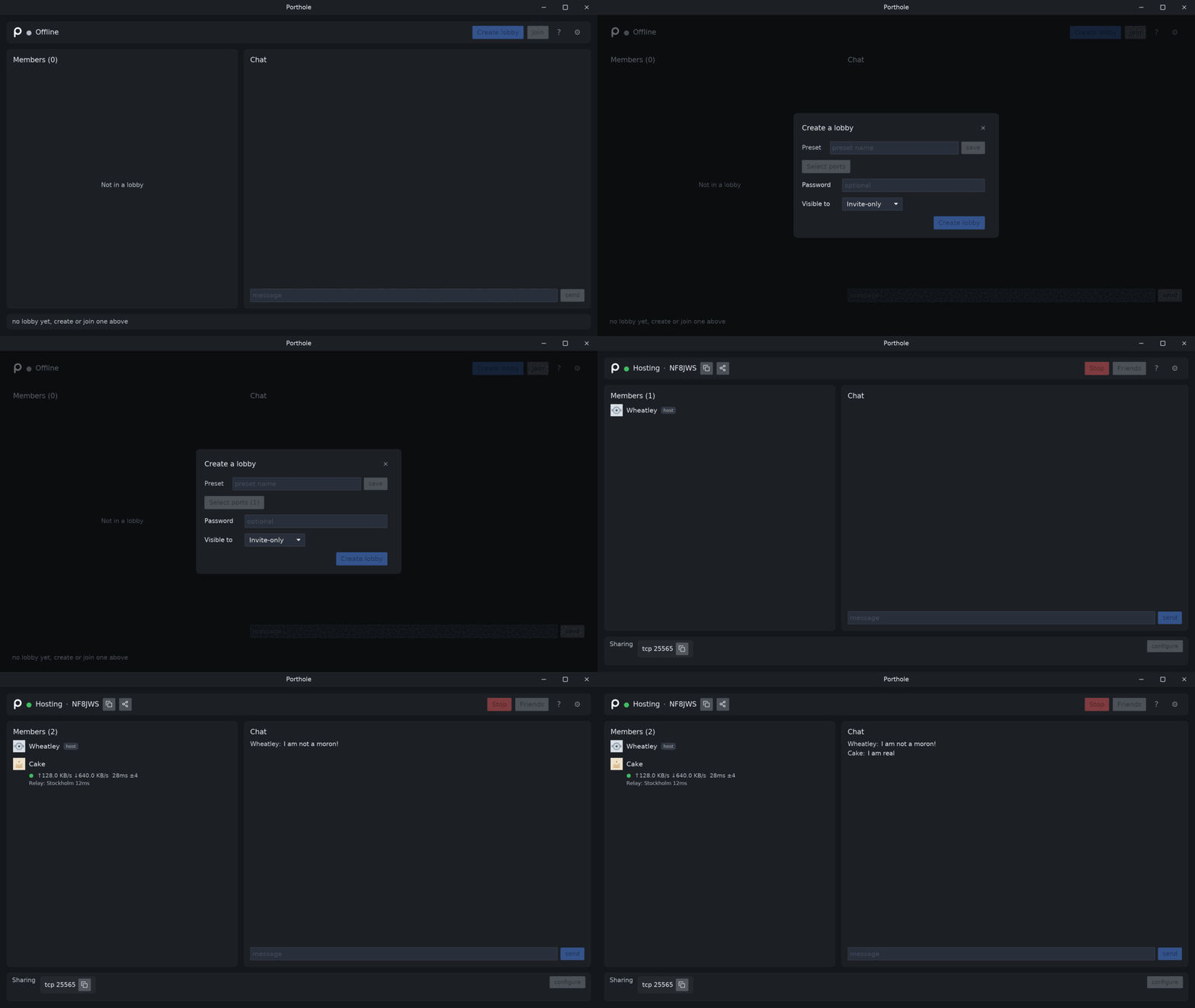
Create a lobby, pick the ports to share, and send a code. Your friend approves each port and it opens on their machine. That is the whole flow.
Your game traffic, tunneled through Steam
Porthole never puts you on a public address. It carries the traffic for the exact ports you share over Steam's own network, straight to the friends you invite.
- 1
Create a lobby
Open Porthole and start a lobby. You get a short share code.
- 2
Pick your ports
Choose the TCP or UDP ports to share, or auto-detect them from a running game.
- 3
Invite friends
Send the share code or invite straight from your Steam friends list.
- 4
They approve
Each friend approves the ports they want. Nothing binds on their machine until they say yes.
- 5
Play together
Traffic tunnels over Steam. Each friend connects on their own machine, as if the server were on their LAN.
Built for real game hosting
Only the ports you choose
Share a single TCP or UDP port, not your whole machine. It is a networking tool, not a full VPN.
No port forwarding
Port forwarding without a router. Works behind NAT and CGNAT, with no public IP and no router setup.
Auto port detection
Point Porthole at a running game and it finds the ports it is listening on. No manual lookup needed.
Join by code or friends list
Friends join with a short share code or straight from your Steam friends list.
Per-port approval
Guests approve each port before it binds on their machine. Kick or ban anyone at any time.
Direct P2P or Valve relay
Steam picks the fastest path for each connection, a direct peer-to-peer link or Valve's relay.
TCP and UDP
Works with both, so dedicated servers and UDP games are equally at home.
Native app and CLI
A clean tray app for Windows, macOS and Linux / SteamOS, plus a scriptable command line.
What people use Porthole for
Host a server for friends
Run a Minecraft world or a dedicated game server and let friends in without touching your router.
Play LAN games over the internet
Bring local-multiplayer and LAN-only games to friends across the country through a Direct Connect to their own machine.
Share any local service
Expose any other local TCP or UDP service to people you trust, and only them.
Porthole vs Hamachi, Radmin, ZeroTier and Tailscale
If you have used a virtual LAN or a tunnel to play with faraway friends, here is where Porthole is different.
| Porthole | Hamachi | Radmin VPN | ZeroTier | Tailscale | playit.gg | |
|---|---|---|---|---|---|---|
| What it shares | Only the ports you pick | Whole machine (virtual LAN) | Whole machine (virtual LAN) | Whole machine (virtual LAN) | Whole machine (mesh VPN) | A public internet address |
| Who can reach it | Friends you invite, per port | Anyone on the network | Anyone on the network | Anyone on the network | Anyone on the network | Anyone with the address |
| Public IP or open port | None | None | None | None | None | Yes |
| Account | Your Steam account | LogMeIn account | Radmin account | ZeroTier account | Tailscale account | playit account |
| Free tier | Free, no peer limit | Up to 5 devices | Free | Up to 10 devices | Up to 6 users | Free, paid upgrades |
| Platforms | Windows, macOS, Linux / SteamOS | Windows, macOS, Linux | Windows | All major platforms | All major platforms | Windows, macOS, Linux |
| Open source | Planned | No | No | Yes | Client only | Client only |
Comparison based on each product's public information as of 2026. Free tiers and features change, so check each product for current details. Hamachi, Radmin, ZeroTier, Tailscale and playit.gg are trademarks of their respective owners and are not affiliated with Porthole.
Questions, answered
Is Porthole a VPN?
No. A VPN joins whole machines into one network. Porthole tunnels only the individual ports you choose to share, and guests approve each port before it binds on their machine.
Is it a Hamachi or Radmin alternative?
Yes, though it works more like a proxy than a VPN. It solves the same problem as Hamachi, Radmin, ZeroTier or Tailscale, playing with faraway friends as if you were on a LAN, but instead of putting your whole machine on a virtual network it proxies only the ports you pick, over Steam's network.
Do I need port forwarding or a public IP?
No. Porthole gives you port forwarding without a router. It works behind NAT and CGNAT, with no public IP and no router setup.
Can I play LAN games over the internet with it?
Yes, for games with a host or listen server. Your friend reaches the shared port on their own machine, at 127.0.0.1 by default or another local address you set, usually through the game's Direct Connect. Porthole forwards the ports you choose, it does not rebroadcast LAN discovery, so use Direct Connect rather than the LAN browser.
Do my friends need Porthole too?
Yes, and it is free. Joining takes one share code, with nothing to set up.
Can the people I share with see my network or files?
No. A guest can reach only the ports you offered and they accepted, nothing else. You can kick or ban anyone at any time.
What about latency?
Porthole runs over Steam's networking, the same infrastructure Valve's own multiplayer games use. It routes each connection over a direct peer-to-peer link or Valve's relay, and the relay is often as fast or faster because it runs over Valve's backbone.
Is it really free?
Yes, it is completely free.
Which platforms are supported?
Windows, macOS and Linux, including SteamOS on the Steam Deck and Steam Machine. The Steam client needs to be running and logged in.
Get Porthole on Steam
Porthole is live on Steam, and it is completely free. Get it and start playing with friends today.
Get it on SteamPick a port, share a code, and play
Get Porthole on Steam and start playing today. It is completely free.